
Salon Rules You Need and How to Present Them to Clients
QuarkBooker Team
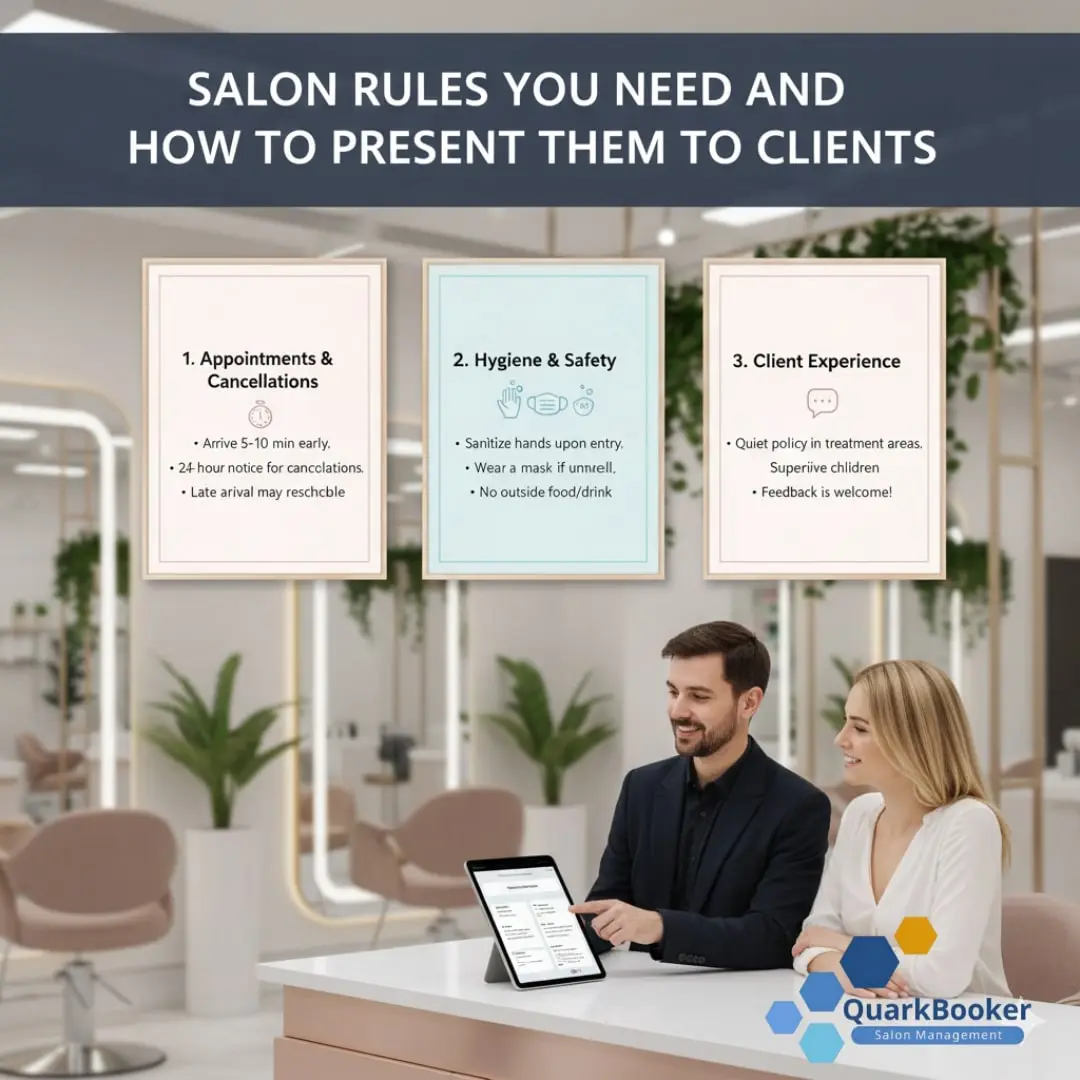
Let's talk about something that makes most salon owners a little uncomfortable: setting boundaries with clients. You went into the beauty industry because you love making people feel gorgeous, not because you wanted to be the bad guy enforcing rules. But the truth is, having clear salon rules isn't about being strict or unfriendly. It's about creating a professional environment where you can actually deliver the amazing service your clients deserve.
The salons you admire most, the ones with loyal clientele and thriving businesses, didn't get there by accident. They have systems in place, and those systems include boundaries that protect everyone involved.
Why Salon Rules Actually Matter
Before we dive into specific policies, let's address the elephant in the room. You might be worried that implementing salon rules will make clients feel unwelcome or drive them away. The reality is quite the opposite.
Clear expectations create a better experience for everyone. Your organized clients appreciate knowing exactly what to expect. Your team feels supported when they don't have to make judgment calls about every situation. And honestly, the clients who push back against reasonable boundaries probably aren't the ones building your business anyway.
When you operate without clear salon rules, you're essentially running on chaos mode. Someone shows up 20 minutes late and expects their full service. Another client cancels for the third time at the last minute. Someone brings three kids who aren't getting services. Each situation eats away at your profitability, your sanity, and your ability to serve your best clients well.
The Non-Negotiable Salon Rules Every Business Needs
1. Appointment and Cancellation Policies
This is where most salon owners lose money without even realizing it. Every empty chair represents lost income that you can never recover. Your time is literally your inventory, and unlike a boutique that can sell yesterday's dress today, you can't sell yesterday's 2 PM slot.
A solid cancellation policy typically requires 24 to 48 hours' notice for any cancellations or reschedules. Many successful salons charge a cancellation fee (often 50% of the service cost) for late cancellations or no-shows. Some require credit card information on file for booking, which dramatically reduces no-show rates.
Here's what works: requiring a deposit for first-time clients, lengthy appointments, or clients with a history of cancellations. This deposit can be applied to their service or forfeited if they don't show. It sounds strict, but it's actually just good business practice that restaurants and hotels have used forever.
2. Tardiness Guidelines
Late arrivals are one of the most common challenges in any salon, and they create a domino effect throughout your day. If you fully accommodate one late client, every client after them pays the price with a rushed service or their own delay.
Your salon's rules should clearly state what happens when someone arrives late. A common policy is: if a client arrives more than 15 minutes late, they can either accept a shortened service (you'll do what's possible in the remaining time) or reschedule for another day. Some salons set the threshold at 10 minutes for detailed services like color correction.
This is where Quarkbooker becomes especially useful. The platform allows you to automatically include your lateness policy in booking confirmations and reminder messages, ensuring clients understand your expectations before they arrive. With automated reminders sent at the perfect time, clients are far less likely to show up late.
The key is communication, and Quarkbooker helps you deliver it consistently and professionally.
3. Payment Terms and Pricing
Money awkwardness causes so many unnecessary problems in salons. Eliminate the weirdness by making everything crystal clear upfront. Your salon rules should outline accepted payment methods, whether you still take checks (most salons don’t), and any fees for returned or failed payments.
Be transparent about pricing for all services, including consultations. Many salons charge a consultation fee for complex color corrections that can be applied to the final service if the client decides to proceed. This prevents clients from gathering expert advice they plan to use elsewhere without compensating the stylist’s time.
If you offer package deals or memberships, spell out the terms clearly cancellation rules, contract periods, refund conditions, and whether unused services can be transferred. Platforms like Quarkbooker make this seamless by allowing clients to purchase packages, memberships, and even pay deposits directly through the system, removing awkward money conversations at the front desk.
Tipping policies also fall under this category. While clients shouldn’t feel pressured to tip, you can clarify whether gratuity is included in certain service prices (such as bridal or event packages) and whether your salon accepts tips via card payments. Quarkbooker supports multiple payment options, making it easier for clients to choose the method they prefer without hassle.
4. Guest and Children Policies
This is a big one that many salon owners struggle with. Creating salon rules around children and extra guests isn't about being unwelcoming. It's about maintaining the relaxing, professional atmosphere your clients pay for.
Many salons have adopted a simple policy: children are welcome only if they're receiving services or if they're accompanied by another adult who can supervise them. The client receiving services cannot be responsible for watching children, both for safety reasons and because they deserve to relax during their appointment.
As for extra guests, some salons welcome them in the reception area but not in the service area, while others prefer that clients come alone to maximize the serene environment. There's no wrong answer, just what works for your space and clientele.
5. Service Guarantee and Correction Policies
What happens when a client isn't happy with their service? Having clear salon rules about this protects both you and your clients from misunderstandings.
Most salons offer complimentary corrections within a certain timeframe (usually 7-14 days) if clients aren't satisfied with their service. However, this typically doesn't apply to situations where the client went somewhere else afterward, used box color at home, or didn't follow aftercare instructions.
Your policy should also address whether you fix work done at other salons. Many stylists prefer not to, as correcting someone else's mistakes is challenging and can lead to liability issues. If you do accept correction work from other salons, consider charging a premium rate.
6. Health, Safety, and Disclosure Requirements
Your salon rules must include health and safety requirements, both for legal protection and for the well-being of everyone involved. Clients should be required to disclose allergies, sensitivities, scalp conditions, medications that might affect services, and any relevant medical conditions.
You'll also want a policy about illness. It's completely reasonable to ask clients to reschedule if they're actively sick with something contagious. Yes, you might lose that day's revenue, but you'll save your staff from getting sick (which costs you more in the long run) and prevent other clients from exposure.
Some salons have added policies about fragrance use, asking clients to avoid heavy perfumes or colognes before appointments, especially for services like facials or lash extensions, where they'll be in close quarters with the technician.
7. Product Use and Retail Policies
If you retail products, your salon rules should cover your return and exchange policy. Can clients return unused products? Within what timeframe? What about opened products they didn't like?
You might also want to address outside products. Some salons don't allow clients to bring their own color or products due to liability issues and unpredictable results. Others are fine with it but charge differently for the service.
8. Photo and Social Media Policies
In today's Instagram-driven world, you need salon rules about photography. Can clients take photos during their appointment? Can they post before and after shots? Most importantly, do you have the right to photograph their results and share on your social media?
Get written consent for any photos you plan to use in marketing. Many salons include this in their new client forms, making it part of the intake process rather than an awkward ask after the fact.
Learn How To Build Local Brand Partnerships Salon Growth
The Art of Presenting Salon Rules Without Alienating Clients
Having great policies means nothing if you present them poorly. The way you communicate your salon rules can mean the difference between clients who respect your boundaries and clients who feel attacked or unwelcome.
Lead with Benefits, Not Restrictions
Human psychology is fascinating. The same rule presented in two different ways gets completely different reactions. Instead of saying "We charge a fee for cancellations with less than 24 hours' notice," try "Our 24-hour cancellation policy helps us keep appointments available for all our valued clients and ensures our stylists can maintain their schedules."
See the difference? The rule is identical, but one version sounds punitive while the other sounds like you're caring for everyone's interests.
Frame every policy as a benefit. Your tardiness policy ensures everyone gets their full service time. Your children policy maintains the relaxing atmosphere that clients come for. Your health disclosure requirements keep everyone safe.
Use Multiple Touchpoints for Communication
Don't expect clients to read your salon rules once and remember them forever. Effective salons weave their policies into multiple touchpoints throughout the client journey.
Include them on your website's booking page, in confirmation emails, on new client intake forms, in appointment reminder texts, and on tastefully designed signage in your reception area. This repetition normalizes your expectations without feeling nagging or aggressive.
When someone books their first appointment, this is the perfect time to send a welcome email that warmly outlines your policies. Something like: "We're so excited to meet you! To help your first visit go smoothly, here's what to expect..."
Design Matters More Than You Think
A beautifully designed policy display feels completely different than a printer paper taped to the wall. Invest in having your salon rules professionally designed and framed for your reception area. Consider them part of your decor, not an afterthought.
Your website, booking software, and email communications should also reflect your brand aesthetic. When your policies look as polished as your salon, they feel like a natural extension of your professionalism rather than an annoying list of don'ts.
Train Your Team Thoroughly
Your salon rules only work if your entire team can communicate them confidently and consistently. Train your team thoroughly by role-playing difficult conversations during team meetings. What do they say when someone shows up late? How do they handle a client who brings unruly children?
When your team feels prepared and supported in enforcing boundaries, they're much more likely to do it kindly and effectively. They'll also appreciate not having to make judgment calls on the fly about what's acceptable.
Address Violations Privately and Kindly
When someone breaks one of your salon rules, handle it privately and with grace. A quiet conversation is almost always more effective than a public callout. Most people aren't trying to be difficult; they simply forgot or didn't realize the impact of their actions.
Try something like: "I wanted to mention that we noticed you've had to cancel your last two appointments with less than 24 hours' notice. We completely understand that life happens, but we do have to start charging our cancellation fee after this point. Is there anything we can do to help you keep your appointments, like booking further out or choosing different times?"
This approach is firm but friendly, and it gives clients a chance to course-correct before penalties kick in.
Discover the Key Criteria for Choosing Salon Booking Software
Be Willing to Make Exceptions (Occasionally)
The thing about rules is that they should be consistently enforced about 95% of the time. That remaining 5% is your grace margin for true emergencies and exceptional circumstances.
If a loyal client of five years has a genuine emergency and cancels last minute for the first time ever, waiving the fee is good business. If someone's running late because of a car accident, of course, you'll do your best to accommodate them.
The keyword is occasionally. When exceptions become routine, you no longer have salon rules—you have suggestions. But showing humanity in legitimate situations builds loyalty and demonstrates that your policies exist to maintain quality, not to punish people.
Start Strong with New Clients
It's much easier to establish expectations from day one than to suddenly impose rules on existing clients. Focus on making sure every new client clearly understands your policies from their very first interaction with your salon.
For long-time clients, you can grandfather them into certain exceptions if needed, but ensure they understand that standards are evolving. Most loyal clients will actually appreciate the structure, especially when they see it improving their own experience.