
Clear Salon Rules Without Killing Team Culture
QuarkBooker Team
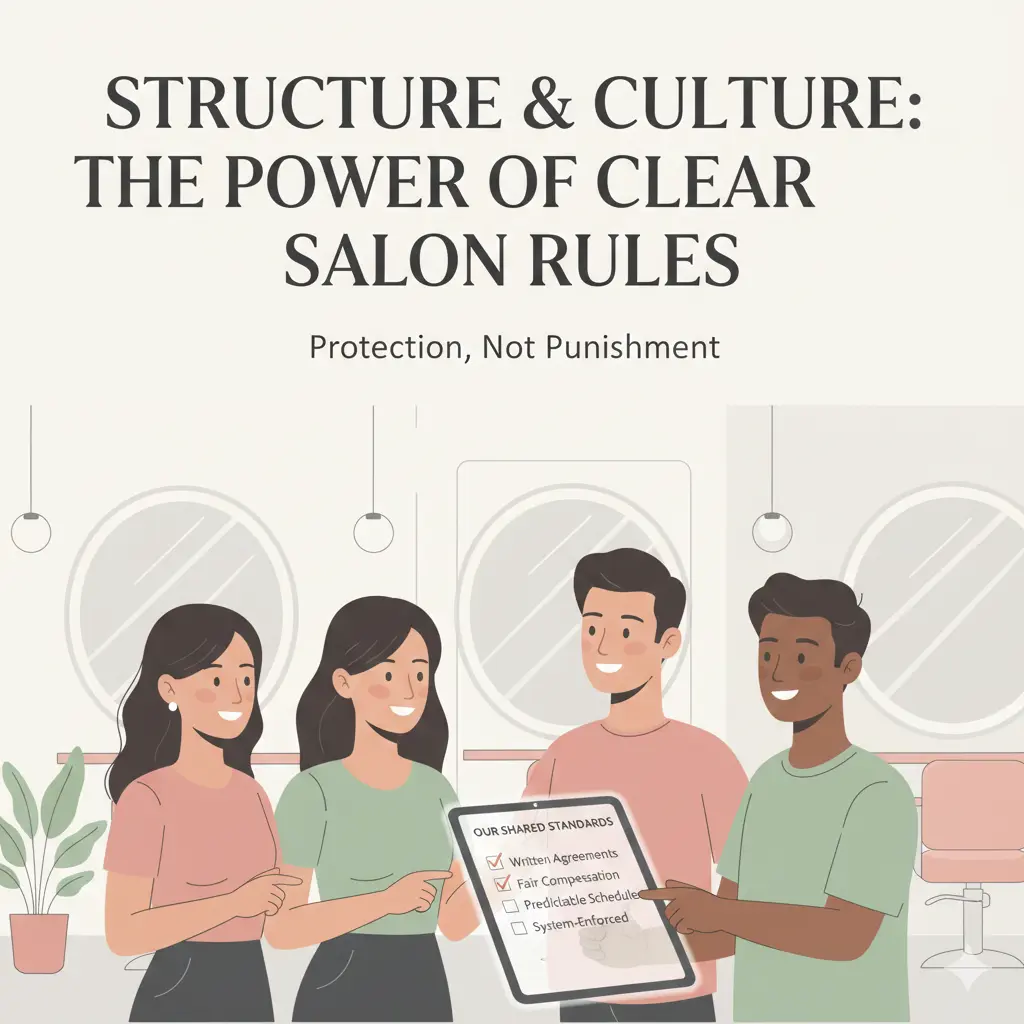
Why Clear Rules Build Better Salon Teams
Many owners hesitate to document rules because they fear looking "too corporate." However, without written standards, management becomes reactive and emotional.
1. Inconsistency is the Real "Culture Killer"
Culture doesn't erode because of rules; it erodes when rules are applied unevenly.
- Selective Enforcement: If one stylist gets away with being late while another is reprimanded, trust is destroyed.
- Mood-Based Management: When policies depend on the owner's mood, staff feel unsafe and frustrated.
- The Fairness Factor: Research shows that perceived fairness is a top driver of employee satisfaction in service roles.
2. Move from "Control" to "Protection"
Top-tier salons frame their systems as a way to safeguard the team's professional life.
- Protecting Time: Rules about service durations prevent stylists from being overworked or consistently running behind.
- Protecting Income: Clear pricing and discount policies ensure that commission-based staff aren't losing money due to "favors".
- Protecting Peace: Documented time-off processes remove the stress of negotiating for a weekend off.
3. Let the System Be the "Enforcer"
The fastest way to strain a relationship is for the owner to constantly play the "bad guy". Professional salons move from owner-driven control to system-driven control.
- Automated Logic: Use a structured booking platform to enforce availability and buffer times automatically.
- Neutral Enforcement: When a booking is rejected because it violates a set rule, it isn't personal—it's just the system.
- Scalable Clarity: Systems allow you to scale your culture without the owner needing to be present for every minor decision.
How to Roll Out New Standards Gently
To introduce structure without causing resistance, follow the "Proactive Rollout" pattern used by luxury salons:
- Explain the "Why": Connect the rule to a benefit for the staff or the client experience.
- Document Once: Instead of repeated verbal warnings, refer to a central staff handbook or agreement.
- Be Consistent: Apply the same standard to the top producer as you do to the newest assistant.
By replacing "case-by-case" management with documented expectations, you create an environment where talented professionals can thrive.