
Reduce Salon No-Shows with Booking Deposits (2026 Guide)
QuarkBooker Team
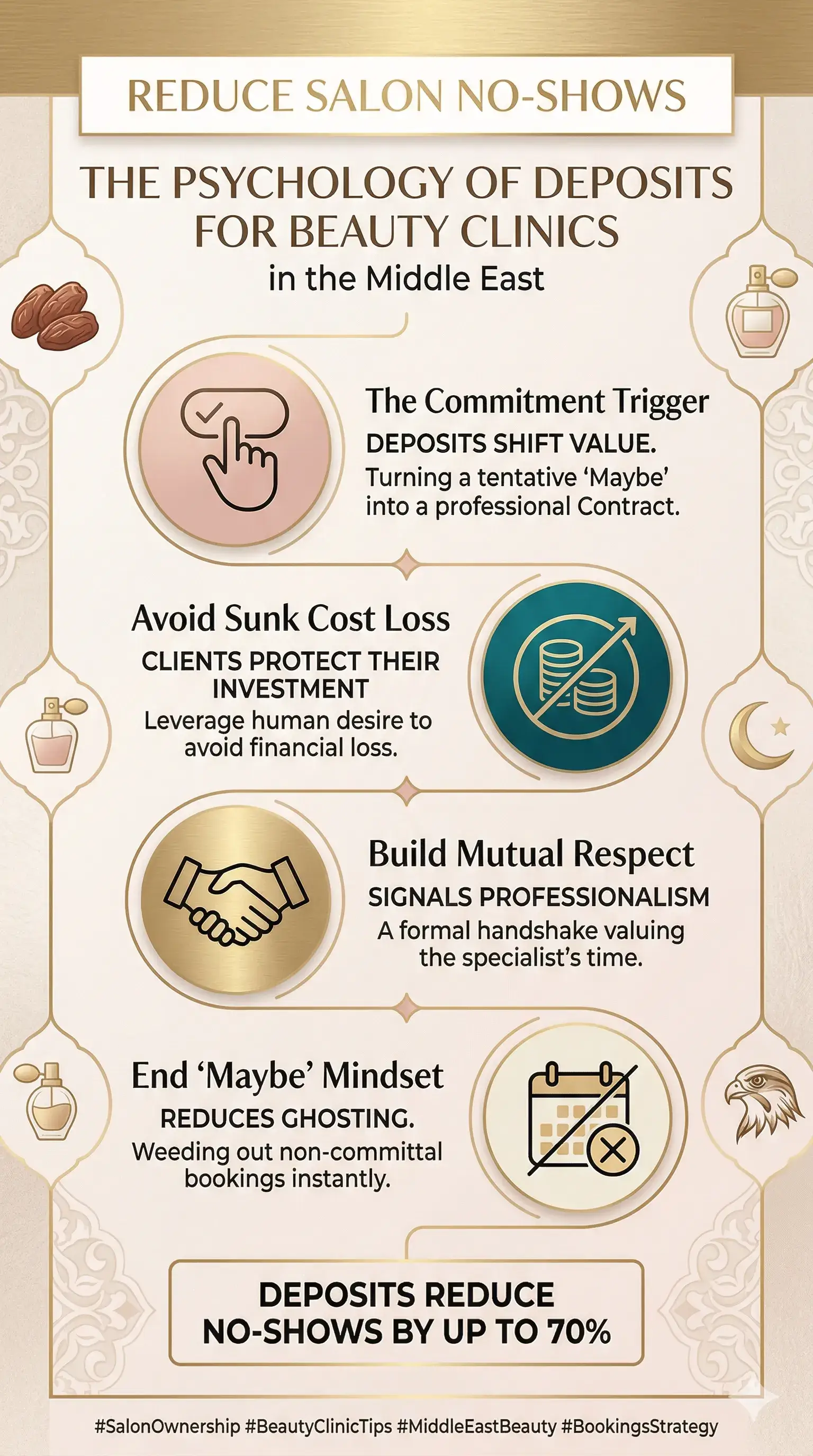
For beauty clinics and high-end spas in the Middle East, no-shows are more than an inconvenience; they are a significant drain on revenue and operational morale. Implementing a deposit system is the most effective way to reduce no-shows because it leverages the psychology of "sunk cost" and commitment. By requiring a financial stake upfront, clinics shift the perceived value of the appointment, transforming it from a tentative "maybe" into a professional contract. This strategy typically reduces no-show rates by up to 70%, ensuring that scheduled time remains profitable.
Understanding the Financial Impact of No-Shows in the GCC
The beauty industry in the Middle East—particularly in hubs like Dubai, Riyadh, and Jeddah—is characterized by high demand for premium services and a culture that values luxury. However, when a client fails to show up for a laser treatment or a complex facial, the clinic loses more than just the service fee.
The hidden costs include:
- Idle Labor: Staff members are paid for time they aren't utilizing.
- Inventory Waste: Preparation of specific serums or clinical disposables.
- Opportunity Cost: The inability to fill that slot with a paying client from a waitlist.
To mitigate these losses, many owners are turning to salon automation to streamline the collection of prepayments and protect their bottom line.
The Psychology of Deposits: Why They Work
The effectiveness of a deposit system isn't just about the money; it’s about human behavior. In psychology, several principles explain why a small financial commitment drastically changes client behavior.
1. The Sunk Cost Fallacy
When a client pays a deposit, they have already "invested" in the outcome. Psychologically, humans are wired to avoid losses more than they are motivated to achieve gains. Once a 100 AED or 200 SAR deposit is paid, the client views the appointment as an asset they don't want to lose.
2. The Principle of Reciprocity and Respect
In many Middle Eastern cultures, business is built on mutual respect. A deposit acts as a formal "handshake." It signals to the client that the clinic is professional and that the specialist’s time is valuable. This sets a standard for the relationship from the very first interaction.
3. Ending the "Maybe" Mindset
Without a deposit, an appointment is often viewed as a placeholder. Research by Phorest Salon Software suggests that clinics without clear cancellation policies suffer significantly higher ghosting rates. A deposit forces the client to confirm their schedule before booking, weeding out non-committal inquiries.
Setting Your Rates: A Strategic Approach
Instead of a "one size fits all" fee, successful clinics vary their deposits based on the complexity of the service. This maintains a low barrier to entry for simple visits while protecting the business for intensive treatments.
Standard Services (Haircuts, Brows, Express Facials)
- Recommended: 20% - 30% Booking Credit
- Why: Covers basic administrative time and keeps the booking process fast.
Premium Treatments (Laser, Fillers, Full Hair Color)
- Recommended: 50% Deposit
- Why: These require high material costs and specialized labor that cannot be easily filled last-minute.
First-Time Client Special
- Recommended: Flat Fee (e.g., 100 AED / 100 SAR)
- Why: Effectively reduces "window shopping" and ensures the new lead is serious about your brand.
By utilizing specific salon software features, managers can automate these tiers so the correct amount is calculated instantly.
Visual Suggestion: The Revenue Growth Chart
Design Idea: A clean, minimalist line graph. The "Pre-Deposit" line shows high volatility and dips (representing lost revenue from gaps), while the "Post-Deposit" line shows a steady, predictable upward trend. Use soft gold or brand-specific pastel colors to keep it "beauty-focused."
Cultural Nuances: Implementing Deposits in the Middle East
Implementing a deposit policy in a region known for its hospitality requires a delicate touch. You want to protect your business without alienating your loyal clientele.
Transparency is Key
Middle Eastern clients value clear communication. Your deposit policy should be visible on your website, social media bios, and within the booking flow. Explain why the policy exists—emphasizing that it allows you to maintain the highest quality of service for all guests.
Flexibility for VIPs
Many clinics choose to waive deposits for long-standing "VIP" clients as a gesture of trust. However, for new clients, a deposit is essential for maintaining salon operations efficiency.
Overcoming Client Objections
The most common fear for salon owners is: "Will my clients go to a competitor who doesn't charge a deposit?"
The reality is usually the opposite. Clients who are serious about their beauty treatments often perceive a clinic with a deposit policy as more "in-demand" and professional. To ease the transition:
- Frame it as a "Credit": Instead of calling it a "fee," call it a "booking credit" that applies toward their final bill.
- Offer a Grace Period: Allow cancellations or rescheduling with no penalty if done 24–48 hours in advance.
- Provide Multiple Payment Options: In the GCC, integrating local payment gateways (like Mada, Apple Pay, or Tamara) can make the deposit process seamless.
Integrating these payments into your broader salon marketing strategy ensures that the booking process feels like part of a premium experience rather than a barrier.
The Role of Automated Reminders
While deposits handle the psychology of loss, automated reminders handle the psychology of "forgetfulness." Even the most well-meaning client can lose track of time.
Combining a deposit with a 48-hour SMS reminder is the "gold standard" for reducing salon no-shows. According to a report by Mordor Intelligence, the digital transformation of salons is a leading trend in the region, with clients expecting tech-enabled convenience at every touchpoint.
FAQ: Deposits and No-Shows in the Beauty Industry
Are deposits legal for beauty clinics in the Middle East? Yes, deposits are a standard business practice across the UAE, Saudi Arabia, and the wider GCC. As long as the terms and conditions are clearly communicated to the client before payment, it is a legally recognized method to protect service-based businesses from loss of income.
What is the ideal cancellation window? The industry standard is 24 to 48 hours. This timeframe provides the clinic with enough lead time to offer the vacated slot to someone on the waiting list. For high-value clinical treatments, a 72-hour window is often recommended.
How do I tell long-term clients I am starting a deposit policy? Communication should be framed as a business upgrade. Send a personalized newsletter explaining that to ensure the best availability and dedicated time for every guest, you are moving to a "Booking Credit" system. Most loyal clients will appreciate the increased organization.
What if a client has a genuine emergency? Flexibility is vital for salon client retention. Most clinics allow for a "one-time" exception where the deposit can be moved to a future date rather than forfeited. This maintains the relationship while still upholding the principle of the policy.
Conclusion
The shift toward deposit-based bookings is an essential evolution for the Middle Eastern beauty market. By understanding the underlying psychology—avoiding loss, establishing commitment, and valuing professional time—clinic owners can stabilize their revenue and focus on delivering world-class results.
Managing these policies manually can be a headache, which is why modern clinics utilize integrated management platforms to handle the heavy lifting. If you are ready to professionalize your booking process and eliminate the cost of empty chairs, you can register your clinic today to start automating your deposits and reminders.