
Salon Operations Guide: Mastering Staff & Inventory (2026)
QuarkBooker Team
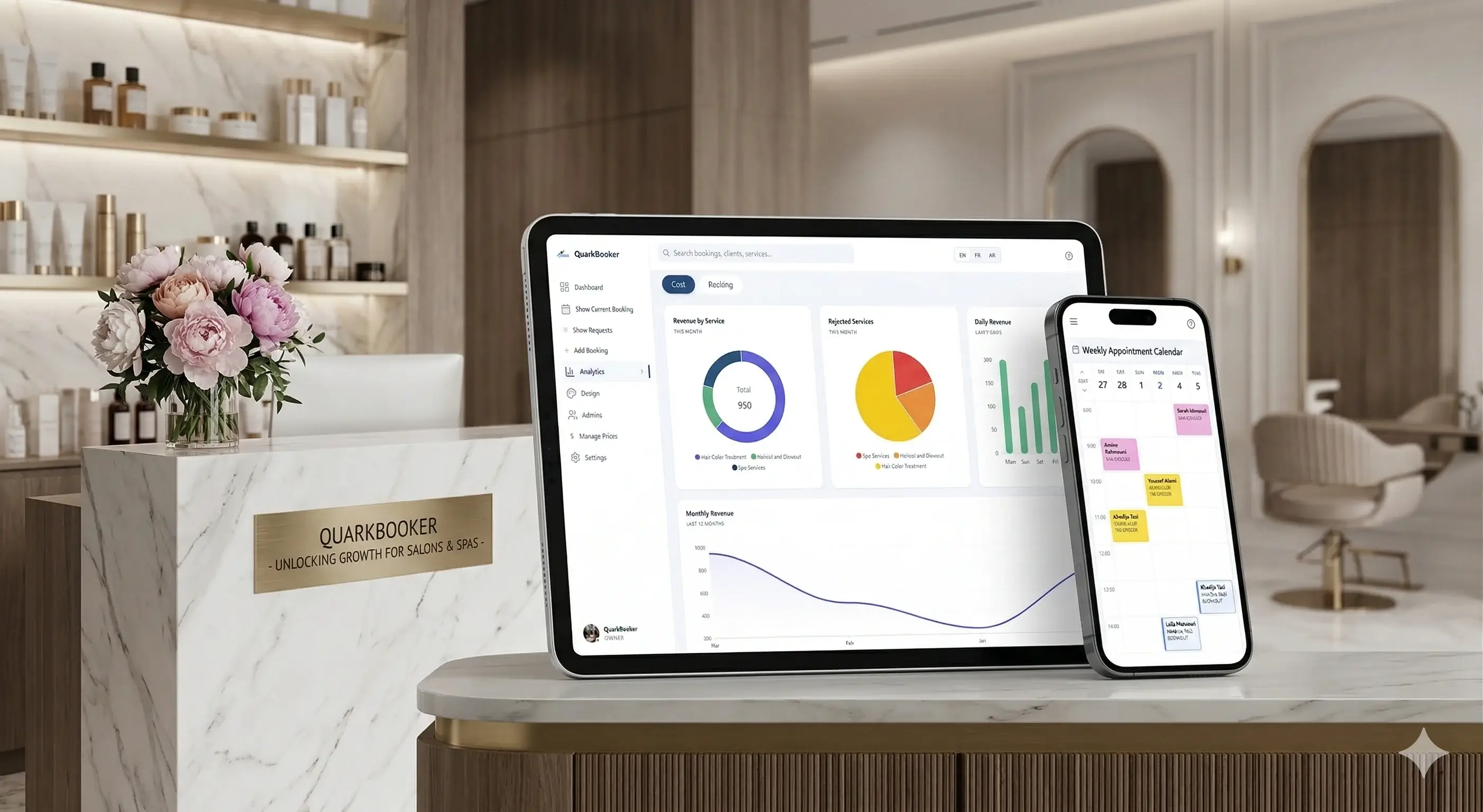
Running a successful salon requires more than just artistic talent; it demands operational excellence. Mastering salon operations involves the seamless coordination of three core pillars: high-performing staff, an optimized booking system, and lean inventory management. To master these areas, salon owners must transition from manual tracking to data-driven decision-making, ensuring that every chair is filled, every product is accounted for, and every team member is empowered to provide a premium client experience.
The Foundation of Salon Success: Operational Efficiency
For many salon owners, the daily "grind" often feels like putting out fires. Whether it’s a double-booked appointment, a missing shipment of color, or a stylist calling in sick, operational gaps can quickly eat into your profit margins.
Efficiency isn't just about working harder; it’s about creating systems that allow your business to scale. By focusing on the "Triple Threat" of operations—Staff, Bookings, and Inventory—you create a foundation that supports long-term growth and high salon client retention.
1. Empowering Your Team: Staff Management and Performance
Your staff is your most valuable asset. In the beauty industry, the relationship between a client and their stylist is the primary driver of loyalty. However, managing a creative team requires a balance of structure and inspiration.
Designing a High-Performance Culture
Performance isn't just about how many haircuts a stylist performs in a day. It is about their contribution to the overall health of the business. Monitor key performance indicators (KPIs) such as:
- Rebooking Rate: The percentage of clients who book their next appointment before leaving.
- Retail Conversion: How often they sell a product to a service client.
- Average Ticket Value: The total revenue generated per client.
Clear Communication and Scheduling
Avoid the chaos of last-minute schedule changes by using centralized salon operations workflows. Clear expectations regarding shift patterns, breaks, and time-off requests reduce friction and prevent burnout. According to a report by the Professional Beauty Association (PBA), salons that invest in ongoing staff education and clear career paths see a 20% higher retention rate among employees.
2. The Art of the Schedule: Optimizing Bookings
A salon’s calendar is its heartbeat. If the calendar is disorganized, the business suffers. Mastering your booking process is the fastest way to increase revenue without necessarily adding more staff.
Combatting the No-Show Epidemic
No-shows are the silent killers of salon profitability. Implementing a multi-channel reminder system—via SMS and email—can reduce missed appointments by up to 70%. Strategies for reducing salon no-shows include:
- Deposits for High-Value Services: Require a percentage upfront for services like balayage or extensions.
- Automated Reminders: Send alerts 24 and 48 hours before the appointment.
- Clear Cancellation Policies: Ensure every client knows the window for rescheduling without a fee.
Leveraging Salon Automation
Modern clients prefer self-service. Data from Mindbody's Wellness Index suggests that over 40% of salon bookings now happen outside of business hours. By implementing salon automation, you allow clients to book 24/7, freeing your front desk to focus on the clients currently in the building.
3. Inventory Management: Protecting Your Margins
Inventory is essentially cash sitting on your shelves. If you have too much, your capital is tied up; if you have too little, you lose out on retail sales and service capabilities.
Back-Bar vs. Retail Inventory
It is crucial to distinguish between products used for services (back-bar) and products for sale.
- Back-Bar Control: Track usage per service. For example, if a stylist uses an entire bottle of color for a root touch-up, you have an education issue or a waste problem.
- Retail Velocity: Identify your "Hero Products" and your "Dust Gatherers." Use the Pareto Principle: 80% of your retail revenue likely comes from 20% of your products.
The "Just-in-Time" Inventory Model
Instead of ordering in bulk once a month, move toward a system that tracks real-time usage. This prevents "out-of-stock" scenarios that frustrate clients and stylists alike. Integrating your inventory with your salon software features ensures that every time a bottle is scanned or a service is completed, your stock levels update automatically.
4. Integrating the Pillars: The Synergy of Data
When your staff management, booking system, and inventory are integrated, you gain access to "Business Intelligence." You can begin to see patterns that weren't visible before.
- Staff vs. Retail: You might notice that Stylist A has high service sales but zero retail sales. This indicates a need for sales training.
- Bookings vs. Inventory: If you see a surge in "Vivid Color" bookings for next month, you can proactively order the necessary dyes before you run out.
- Client Behavior: You can identify which salon marketing campaigns are driving the most profitable bookings.
According to Statista, the global beauty and personal care market is projected to grow significantly, but only for those who can maintain high service standards while controlling overhead costs.
FAQ: Frequently Asked Questions
How can I improve my salon's booking efficiency?
To improve booking efficiency, implement online scheduling to allow 24/7 appointments. Use automated SMS and email reminders to reduce no-shows, and utilize a "waitlist" feature to fill last-minute cancellations. This ensures your stylists' time is maximized and reduces the administrative burden on your front desk staff.
What is the best way to manage salon inventory?
The best way to manage salon inventory is through an automated tracking system that links your point-of-sale (POS) to your stock levels. Perform regular "spot checks" to ensure physical stock matches digital records and use data to identify slow-moving products that should be discontinued or discounted.
How do I reduce staff turnover in my salon?
Reduce staff turnover by creating a clear career path, offering competitive commission structures, and investing in continuous education. Open communication and involving staff in operational decisions foster a sense of ownership. Happy stylists lead to happy clients, which directly impacts your bottom line.
Why is salon automation important for small businesses?
Salon automation is vital because it handles repetitive tasks like appointment reminders, follow-up emails, and inventory alerts. This allows small business owners to focus on service quality and growth rather than getting bogged down in manual admin work, effectively "buying back" time for the owner.
Conclusion: Bridging the Gap with Technology
Mastering salon operations is a continuous journey of refinement. By focusing on empowering your staff, tightening your booking protocols, and keeping a watchful eye on your inventory, you transition from a "busy" salon to a "profitable" one.
In today's competitive landscape, manual spreadsheets and paper appointment books are no longer enough to stay ahead. Forward-thinking salon owners are increasingly turning to comprehensive management platforms to streamline these processes. If you're ready to automate your growth and eliminate the headache of manual scheduling, consider exploring how modern tools can transform your workflow.
Take the first step toward an organized salon and register your business today to experience the power of integrated management.